
How video wall technology is evolving for modern control rooms
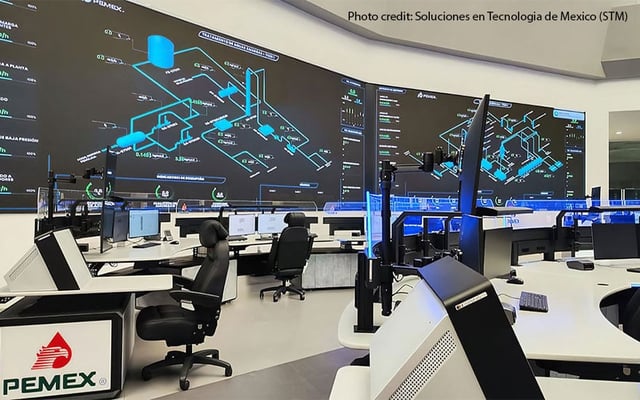
Control rooms are managing more information than ever as operators need to monitor live video, traffic maps, alarms, surveillance feeds, and operational data as events change in seconds.
As the technology feeding information into control rooms changes, expectations for display walls are changing, too. Operators need more than added content; they need to see critical information clearly, interpret it accurately, and share it effectively across teams.
For government and mission-critical control rooms, operational, compliance, and continuity requirements influence product selection. These can include suitability for ongoing operation, applicable procurement requirements, system monitoring, service access, and measures that help maintain operation if a component fails.
By identifying requirements early, it helps teams compare solutions against the conditions in which the display will operate and shape how they approach upgrades to existing control rooms as well as new installations.
Choosing the right display starts with understanding what operators need to see, how they use that information, and which sources are part of their workflow. From there, teams can evaluate viewing distance, pixel pitch, image performance, reliability, and long-term serviceability. These key considerations help refine the list of available options before any specific display technologies or products enter the discussion.
Operator-focused control rooms
A control room video wall is only as effective as the information operators can take from it, so the best designs begin with what operators need.
LED wall designs start with the application and the people who will use the room, by considering questions like:
- What information needs to be displayed on screen?
- How close are operators sitting to the display?
- Does an individual need to examine data in fine detail? Or does the entire team need a shared view of an evolving real-time situation?
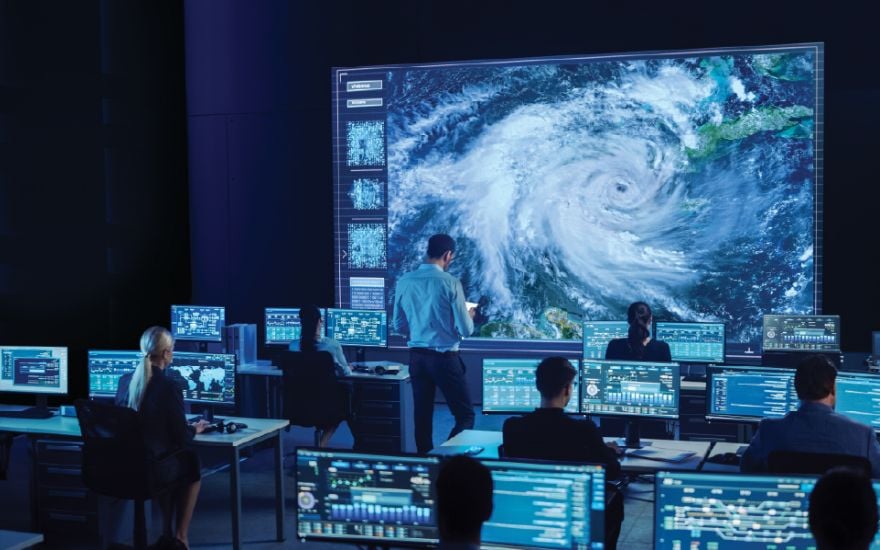
The display has to help people quickly understand what they’re seeing and act on it. Operators in a transportation control center simultaneously monitor network maps, live camera feeds, and incident information while responding to disruptions and an emergency operations center team needs to combine weather data, field reports, and GIS maps to build an operating picture during rapidly changing events.
Once you understand the content, viewing distances, room layout, and operator workflows, you can begin comparing display technologies to match them with the operator’s needs and the type of space available.
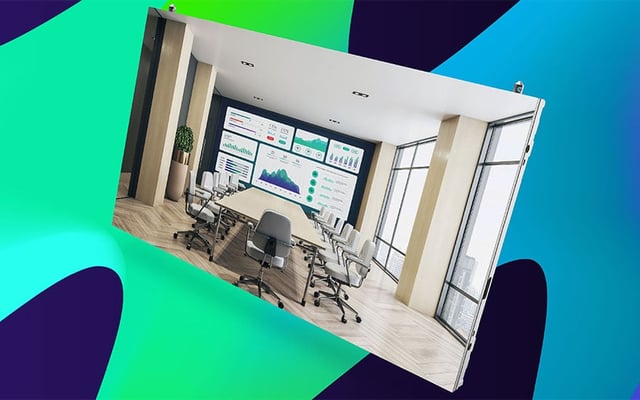
For applications that require a large, seamless shared view, LED video walls can provide the scale and resolution needed to keep detailed content legible at the intended viewing distance. The goal isn’t to create the biggest possible display. It’s to create a visual environment that supports situational awareness without adding complexity.
Expanding the possibilities for control rooms with fine-pitch LED
Fine-pitch LED offers greater flexibility for control room designers during the planning process.
The finer the pixel pitch, the closer the viewing distances the LED wall can support, while preserving the scalability and seamless appearance of a large video wall. That matters when operators need to review detailed maps, camera feeds, dashboards, or other information across a large, shared display.
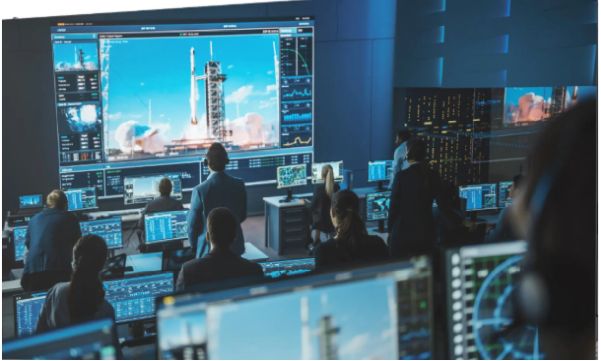
The uninterrupted nature of LED is also an important consideration in applications where information needs to move across the entire display surface. A large map, for example, can span the wall without bezel interruptions dividing the image.
But pixel pitch alone doesn’t determine whether an LED display is right for the application. That technology decision should be application-led, shaped by viewing distance, content type, room layout, and the level of detail operators need to see, so the display choice should reflect those needs. For example, an ultra-fine pixel pitch LED wall may not add practical value if the content and viewing distance don’t require it.
Image quality matters beyond the pixel count
Resolution and pixel pitch are important, but they tell only part of the story. Image-quality characteristics affect different operator tasks and help operators distinguish subtle details and interpret content over prolonged periods. Because of this, displays need to preserve grayscale detail at the room's required brightness level, reproduce colors consistently, maintain sufficient contrast, and present a uniform image across the wall.
Tonal detail, or grayscale performance, is an important consideration. If a display can’t accurately reproduce tonal differences, it can be harder to distinguish important visual details in images, video and data, where there are variations between light and dark areas.
"In mission-critical situations, it’s not a matter of how many pixels are on the screen, but rather how accurately and consistently those pixels communicate information.”
Because control room displays support extended periods of focused work, excessive brightness can contribute to visual fatigue. A good video wall will maintain image quality and grayscale detail at the brightness level appropriate for the application, helping operators view information comfortably without losing important detail.
Color accuracy, contrast, and image uniformity also help operators interpret content consistently. If one area looks noticeably different from another, small variations in maps, video, or data may be harder to compare, and visual discontinuities may distract attention from the information itself.
For control room video walls in mission-critical applications, the question isn’t simply how many pixels are on the wall: It’s how accurately and consistently those pixels communicate information.
Video wall reliability you can count on
In a mission-critical environment, a video wall has to maintain reliable performance for its entire lifetime, not just on day one.
Since many control rooms operate around the clock, display technology must withstand years of continuous 24/7 use. That demand makes serviceability, lifecycle planning, and long-term system management essential to maintaining performance.
To address this requirement, designers and operators need to ask practical questions: How easy is the wall to maintain? How quickly can teams service or replace components? And how can potential problems be identified before they affect operations? These questions define the criteria for long-term reliability.
Remote monitoring and diagnostics give support teams visibility into display health without requiring them to inspect the wall in person. Depending on the system, this may help identify abnormal conditions, plan maintenance, and respond to potential issues before they affect display performance.
The evolving role of video wall technology
As control rooms continue to evolve, organizations will need to adopt new technologies to manage growing volumes and types of data. Introducing analytics, automated outputs, and AI-assisted tools into their operations may change the priority of information presented as these tools flag anomalies, prioritize alarms, or surface relevant content.
But no matter how information is generated or transported, the display wall remains the room’s shared visual reference point and people need to see it clearly to interpret information and decide how to respond. The future may, in fact, include bigger LED walls and higher resolutions, but the priority won’t be size or pixel count alone. It will be about designing control rooms around the application so that operators can clearly interpret critical information and rely on the technology over the long term.
For organizations designing or upgrading mission-critical environments, the practical basis for comparing display technologies is clear: Define what operators need to see, where they’ll view it from, and how the system needs to perform and be maintained over time.
Explore Christie’s LED video wall and display solutions for control rooms and learn how the right visual display technology can support clear, reliable information sharing when it matters most.