Indian creatives redefine what it means to design for emotion and impact
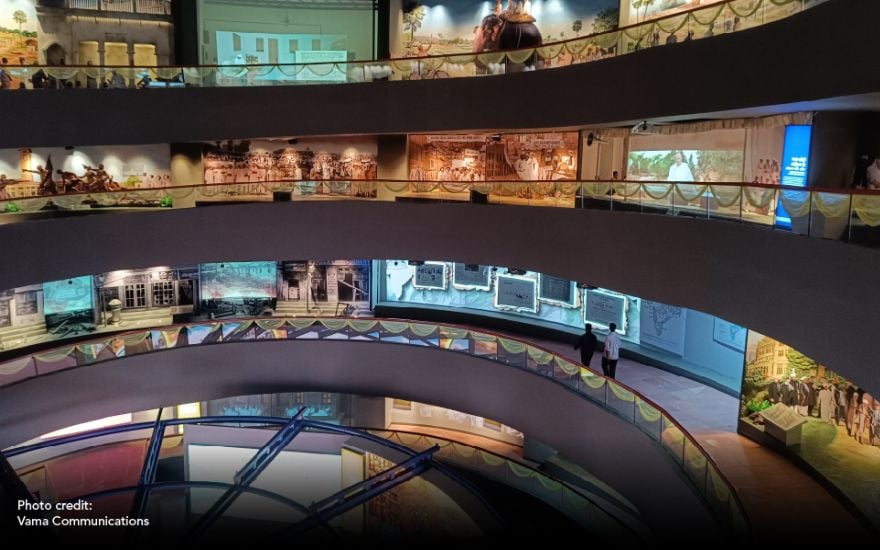
India’s experiential design landscape is undergoing a profound transformation. Across museums, cultural attractions, and public installations, a new generation of creators is moving beyond spectacle for spectacle’s sake. Instead, they are crafting deeply layered environments where narrative, culture, and technology work in harmony to create lasting emotional impact.
In a webinar hosted by Inavate India and Christie, three industry voices, Amardeep Behl, founder of Design Habit; Siddharth Bathla, co-founder of Design Factory India; and Rishubh Nayar, senior director of ProAV sales for India at Christie, offered an inside look at how this shift is unfolding. Their discussion revealed an industry in transition that is grappling with new tools, new audiences, and new expectations, while returning to a timeless truth: powerful experiences begin with powerful stories.
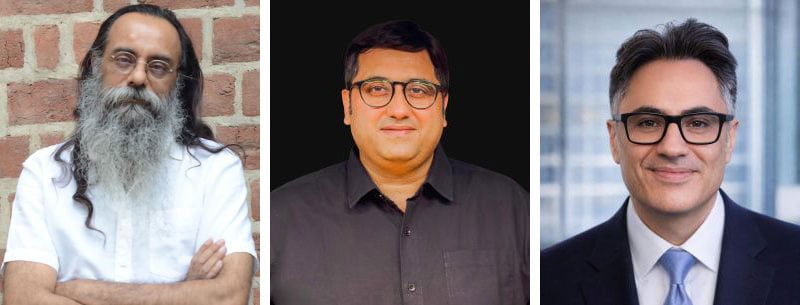
Amardeep Behl, founder of Design Habit; Siddharth Bathla, co-founder of Design Factory India; and Rishubh Nayar, senior director of ProAV sales for India at Christie
Story always comes first
For all the advances in projection, direct-view LED, and real-time content creation, the panelists were unequivocal about one thing: Technology does not drive experiences; the story does.
Siddharth Bathla framed it as a fundamental shift in design thinking. “The real spark is the story you’re telling,” he said. “That’s how I started thinking: what we do needs to have a story at its core. In our process, we always try to discover the story behind whatever we want to do, and then we work backward from there.”
This narrative-first approach reflects a broader evolution in experiential design. Instead of starting with a space or a set of tools, designers now begin by asking what the audience should feel and remember. Every decision that follows, from spatial layout to technology selection, is shaped by that intent.
Reinforcing this perspective, Amardeep Behl emphasized the centrality of content. “Content is king. For me, it’s a 60-40 split, content is 60, technology is 40. It’s the content that leads the way, guiding what I do and how I bring things to life. If I focus on that, I know I’ll have the right impact. That’s how I see the balance.”
Even from the standpoint of a technology provider, the hierarchy remains unchanged. “People go to the cinema to watch a movie that resonates with them, not because it’s being projected using a Christie projector,” said Rishubh Nayar. “At the end of the day, what truly matters is what’s being shown. It’s the content that builds that emotional connection with the audience.”
In an era where visual technology is more accessible than ever, this clarity is critical. Tools can enable, enhance, and amplify, but without a compelling story, they can't sustain engagement.
Rooted in culture, designed for impact
If story is the foundation, culture provides the context. In India, that context is both vast and deeply resonant. It's shaped by centuries of history, layered traditions, and diverse regional identities that influence how stories are told and experienced. For designers, this means moving beyond surface-level references and engaging with culture in a more meaningful way.
“Whatever we’re creating here in India has to connect to the Indian ethos. It needs an Indian hook,” said Behl. For him, culture is not an optional layer but an intrinsic part of the creative process that shapes both narrative and experience.
This approach has led to projects that move beyond traditional museum formats to become immersive storytelling environments grounded in local identity. Bathla pointed to the Smritivan Earthquake Museum in Bhuj as an example of how a project can evolve when designers look beyond the initial brief. What began as a museum about a natural disaster transformed into a tribute to resilience and the enduring spirit of the region’s people.
“Culture really defines us as designers, as storytellers,” Bathla explained. “Technology is just a vehicle for telling those stories.”
For Nayar, this cultural grounding is what sets India apart in the global experiential landscape. “What truly amazes me is how we’re able to depict our own culture, religion, and experiences in these spectacular ways. It’s not just about the technology. It’s about how it’s woven into the subject matter.”
As India’s experiential sector continues to expand into Tier-2 and Tier-3 cities—widely regarded as new engines of growth, fueled by affordable housing, enhanced infrastructure, and increasing digital accessibility—cultural authenticity is emerging as a powerful catalyst for engagement. Rather than relying on imported formats or copied concepts, these experiences are uniquely shaped by the stories, traditions, and identities of the communities they serve.
When technology disappears
In a field defined by constant innovation and rapid technological advancement, it may seem counterintuitive to suggest that the best technology is the least visible. After all, much of the industry’s progress is measured in brighter displays, higher resolutions, and more sophisticated systems. Yet for the panelists, true success lies not in showcasing the technology, but in how seamlessly it integrates into the experience.
“The users come in and enjoy the experience without really noticing the hardware,” said Nayar. “That’s where we make a difference by bridging the gap between creative intent and technology execution.”
This principle is becoming increasingly important as designers navigate a rapidly evolving toolkit that includes both proAV projectors and LED video walls. Once seen as competing technologies, they are now being integrated in more nuanced ways, with each contributing its own strengths to a cohesive environment.
“It’s the content that builds that emotional bond with the audience. That’s what makes people engage.” - Rishubh Nayar, senior director of ProAV sales for India, Christie
Behl offered a vivid analogy. “LEDs are like the loudmouths, while projectors are more like gentle poets – subtle but still incredibly impactful. There’s a clear difference between what LEDs can do and what projection brings to the table.”
The challenge, he explained, is to balance these contrasting qualities. “It’s never about technology for its own sake. It’s about using technology for impact. Technology should fit in naturally. It’s not about showing off what you can do. It’s about using it gracefully to make people feel something.”
For Bathla, this balance is also tied to spatial design. Projection presents challenges in terms of visibility and environmental control, while LED introduces its own considerations around texture and integration. The future, he believes, lies in resolving these tensions and allowing both technologies to coexist seamlessly.
“I really believe it’s going to happen sooner or later,” he said. “These technologies will mix together.”
Designing for the five-second audience
If technology is evolving rapidly, audiences are changing even faster. Today’s viewers, especially the younger generation, are shaped by social media, streaming platforms, and constant digital stimulation. Capturing their attention is both more difficult and more critical than ever.
“In five seconds, they decide whether you’re any good,” said Behl. “In those five seconds, they decide whether what you’re offering is worth their time or they’ll just walk away. So you’ve got to deliver right from the start.”
This reality has pushed designers toward more immersive, multi-sensory environments that engage audiences on multiple levels. By combining scale, sound, movement, and interactivity, these spaces create a sense of presence that can’t be replicated on a screen.
At the same time, some fundamentals remain unchanged. “Technology keeps evolving,” Bathla observed, “but that emotional trigger—that spark—stays the same.”
This duality sits at the heart of modern experiential design. While attention spans may be shorter, audiences are still willing to engage deeply when something resonates. As Bathla pointed out, the same viewers who scroll past content in seconds will spend hours binge-watching a series on streaming platforms if it captures their interest.
For Nayar, this reinforces the importance of emotional connection. “It’s the content that builds that emotional bond with the audience. That’s what makes people engage.”
Simply put, the challenge is not simply to attract attention, but to transform it into sustained engagement.
From capability to responsibility
As tools like AI and real-time rendering engines become more accessible, the barriers to creating high-quality content are rapidly diminishing. What once required extensive resources can now be achieved in a fraction of the time.
“We’re seeing the impact everywhere,” said Nayar. “Experiences are becoming more meaningful and achievable in a much shorter timeframe.”
However, this accessibility introduces a new challenge. When technology becomes easier to use, the risk of relying on it too heavily also increases.
“That is why it’s not enough to just buy a projector and add some AI content,” Behl cautioned. “That’s not what India needs right now. India needs a much greater impact.”
Bathla highlighted a common issue that arises when projects begin with the wrong starting point. “Whenever a client comes to us saying, ‘I saw this technology, can you do that?’ and the conversation starts with the tech instead of the museum itself, the project almost always runs into trouble.”
Beyond the creative process, structural challenges remain. Many large-scale projects are driven by government investment, which can introduce complexities around procurement, execution, and long-term maintenance.
“The real challenge comes after the museum is built,” Behl said. “What happens five years down the line? It’s heartbreaking to see such good work slowly fade away if they are not properly maintained and cared for.”
For Nayar, improving these systems is essential to sustaining growth. “Disney and Universal weren’t built by going with the lowest bidder. If we can make sure the right vendors are getting awarded, that would make all the difference.”
As India continues to invest in experiential spaces, the focus is shifting from what is possible to what is meaningful. The question is no longer whether a project can be built, but whether it delivers lasting value.
A defining moment
India’s experiential design industry stands at a pivotal moment. With a rich cultural foundation, growing investment, and access to advanced technologies, the potential is immense.
But as this conversation makes clear, the future will not be defined by brighter displays or larger canvases. It will be shaped by how effectively creators balance story, culture, and technology to create experiences that resonate on a human level.
For Behl, that balance is both a challenge and an opportunity. “We weave them together into something poetic, something with real emotional impact.”
In the end, that may be the true measure of success. It's not how spectacular an experience looks, but how deeply it’s felt.