
When José Manuel Fuentes talks about cinema, he doesn’t begin with technology. He begins with the giant hand-painted movie billboards that once covered the façades of Spain’s grand theatres.
Long before he founded Sercine and became one of Christie’s longest-standing cinema partners in Spain, Fuentes was surrounded by the magic of movies from childhood.
His father worked in Madrid during the 1950s and 1960s, creating large-scale promotional artwork for landmark cinemas such as Palacio de la Música, Cine Avenida, and Cine Imperial. These handcrafted pieces—some as large as 10 meters wide by six meters high—were produced in the workshops of legendary Spanish poster artist Jano and displayed along Madrid’s iconic Gran Vía.
Back then, going to the cinema was an experience that started before audiences even entered the auditorium.
“Later, my father moved to Salamanca and became a projectionist at a summer cinema,” Fuentes recalls. “That’s where our love of cinema came from.”
Growing up in the projection booth
That family connection would shape his future.
At just 13 years old, Fuentes began working as a projection booth assistant. He even arranged permission to leave school early so he could make it to the cinema in time for his shift.
“I fell in love with projectors immediately,” he says. “At 14, I was already covering shifts in several cinemas, and in the morning, I worked in a projector repair workshop. I practically lived inside a booth.”
Over the following years, he combined projection work, repairs, and installations across Spain—hands-on experience that would eventually lead to the creation of Sercine.
Founded in 1990 in Salamanca, a historic city in western Spain, the company began by installing and servicing cinema projectors during a period of major technological change for the industry.
Discovering Christie
As the business grew, Fuentes traveled across Europe searching for better projection technology. During a trip to Germany in the mid-1990s, he saw a Christie 35mm projector for the first time.
“When I saw the Christie projector, it was like seeing a beautiful woman,” he says with a smile. “I fell in love with it. It was more advanced than the others, and it had elegance as well as quality.”
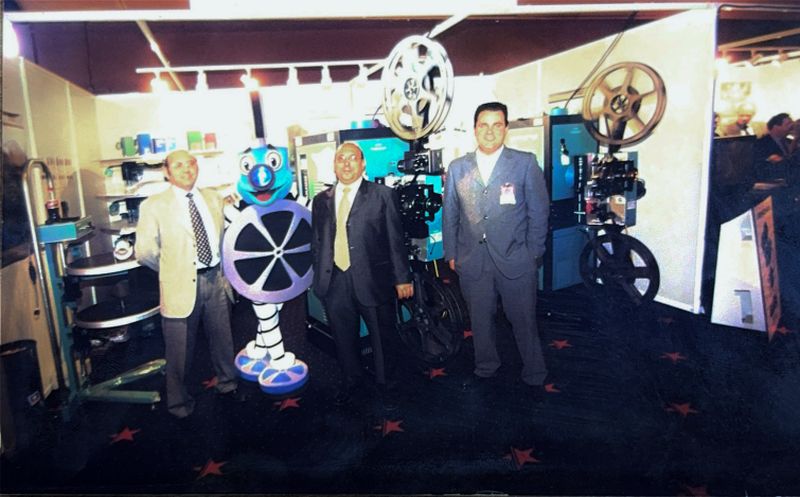
Christie 35mm projectors exhibited at the Expocine show in Spain in 1997. Sercine’s José Manuel Fuentes is pictured in the middle.
Fuentes still remembers those analog machines fondly.
“35mm projectors were beautiful. Their platters, mechanics, the way they operated—there was something special about them.”
Soon afterward, he traveled to Miami, where he again encountered Christie equipment through a local distributor. That trip led to direct contact with Christie and, in particular, Jack Kline, then president of Christie, and who would later become one of the key figures in the development of digital cinema.
Fuentes visited Christie’s manufacturing facility in California in 1996, an experience he describes as unforgettable.
“We went to see the factory, and I was amazed by the number of projectors and the technology. It was spectacular.”
A relationship built on trust
That early connection developed into a close and lasting relationship.
Kline later visited Salamanca in 2002 to spend time with the Sercine team.

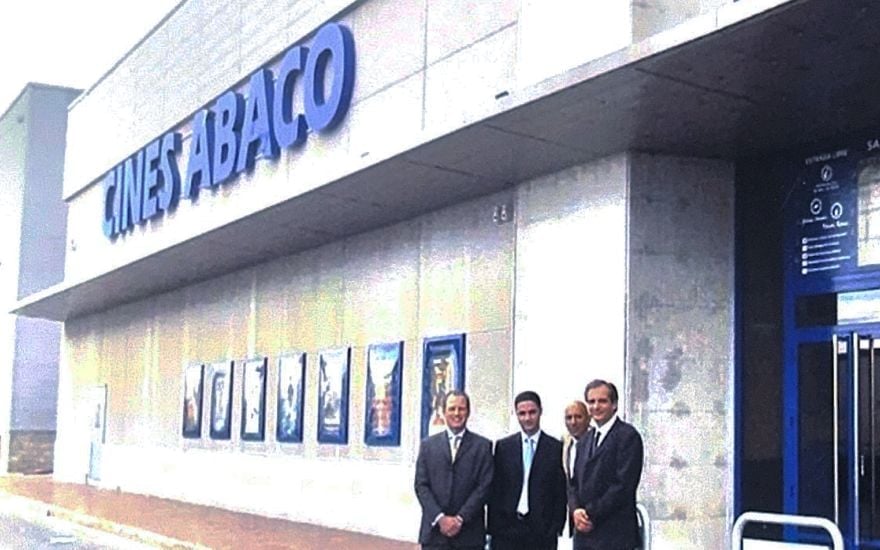
Teams from Sercine, Christie, and Cines Abaco posing after signing the agreement for the sale of 90 Christie projectors to Cines Abaco in Spain in the early 2000s.
For Fuentes, Kline represented a philosophy that aligned perfectly with Sercine’s own values.
“Jack used to say that because cinema is made in the U.S.—through Hollywood—it was also their responsibility to make sure it was projected properly. His philosophy was always about protecting presentation quality.”
400 Christie 35mm projectors—and counting
Sercine soon became one of Christie’s most important cinema partners in Spain.
The company installed approximately 400 Christie 35mm projectors in cinemas across the country, helping support the rapid growth of multiplex exhibition during the 1990s and early 2000s.
"Christie image definition is the best,” (Fuentes) says. “That consistency has been essential in delivering quality to audiences."
That partnership continued into the digital era, with Sercine installing around 300 Christie digital cinema projectors throughout Spain.
“We are the only cinema company in Spain that has worked exclusively with Christie,” says Fuentes. “We have never sold another brand.”
For him, that loyalty is based on performance.“Christie image definition is the best,” he says. “That consistency has been essential in delivering quality to audiences.”
A landmark project: AMC Las Rozas
Among the many projects completed by Sercine, one stands out above all others: AMC Las Rozas in Madrid.
Opened in 1999 within the Heron City leisure complex, the venue featured 24 screens. It became one of Spain’s largest megaplexes at the time, helping introduce the U.S.-style multiplex model to the Spanish market.
For Sercine, it was a defining challenge.
“The 24 screens at AMC Las Rozas kept me awake at night,” Fuentes says. “It was the first project of that scale we had done. There was a lot of work—but also a lot of pride.”
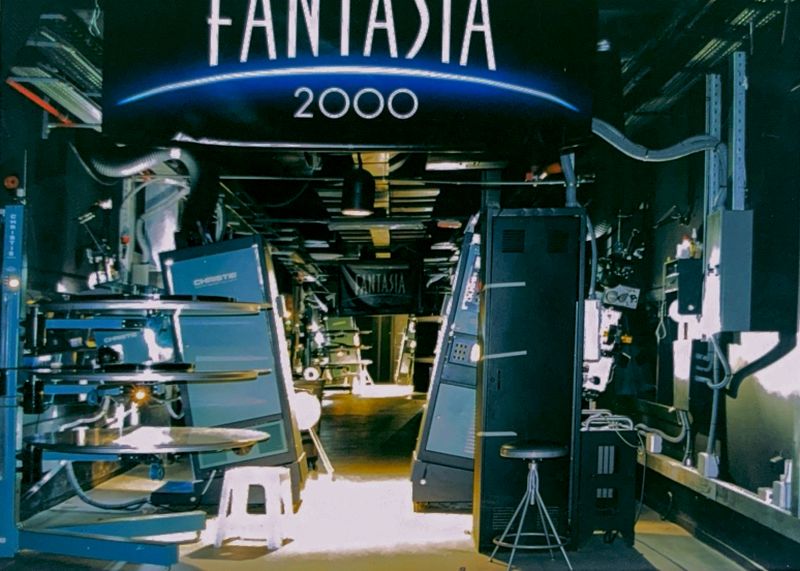
AMC Las Rozas multiplex in Madrid, opened in 1999. The venue featured 24 screens, each equipped with Christie 35mm projectors, and became one of Spain’s largest megaplexes at the time, helping introduce the U.S.-style multiplex model to the Spanish market.
The installation became a milestone in the company’s development and helped establish Sercine as a trusted integrator for major cinema complexes.
Festivals, service, and keeping cinemas alive
Beyond installations, Sercine has also supported some of Spain’s best-known film festivals as Christie’s technical projection partner, including SEMINCI in Valladolid, the Málaga Film Festival, Cartagena International Film Festival, Ourense Film Festival, and Cineuropa in Santiago de Compostela.
The company has also expanded into exhibition, operating 16 cinema screens across different regions of Spain.
In several cases, Sercine has stepped in to prevent local cinemas from closing, taking over management and helping preserve moviegoing in communities where theatres were at risk of disappearing.
Still passionate after all these years
Thirty years after the partnership began, Sercine and Christie continue to work together with the same shared focus: delivering the best possible cinema experience.
For Fuentes, the feeling that first drew him into a projection booth at age 13 has never disappeared.
“After a lifetime in this business, I still feel the same when the lights go down,” he says. “What matters is that the film is shown properly and that the audience enjoys it. That has never changed.”