
Learn how the Australian cinema industry has stayed resilient
Resilience is the capacity to recover from adversity and continue looking to the future with optimism and determination, even in the face of significant challenges.
Resilience, like persistence, grit or determination, is a quality many people aspire to but often find difficult to fully understand. In ‘How Resilience Works’ (Harvard Business Review, 2002), Diane Coutu identifies three pillars of resilience: accepting reality, improvising, and finding meaning.
The Australian cinema industry has engaged with these principles repeatedly, not only to weather disruption, but to drive technological development and industry growth.
Unwillingness to confront the reality of challenging circumstances is a very human response. Understandably, we may find ourselves avoiding hard realities and confronting truths about our industry. Yet those who do confront those realities have a far better chance of overcoming obstacles. This applies equally to people and organizations.
Facing industry realities
The reality for cinemagoing in 2025 is that there has never been more entertainment, leisure and culture options competing for audience time, attention and money. While that can be framed as a problem for cinema, it also points to a reality where cinema is given the opportunity to define the out-of-home entertainment offering – not in competition, but in contrast and collaboration. The Australian cinema industry’s resilience in an increasingly VUCA (Volatile, Uncertain, Complex, and Ambiguous) world lies in recognizing limited audience attention alongside the unique, meaningful experiences, cinema can offer.
From 2020 onwards, Christie took a clear-eyed view of the market and anticipated what was to come. During this period, sales of home-entertainment systems rose sharply, and the company foresaw the technological challenges that would follow. As expected, retailers now promote 8K displays, HDR, variable refresh rates, and screens up to 116 inches. At the same time, while the home-entertainment industry received an unprecedented boost, the cinema industry faced a very challenging period that limited its ability to invest in new technological solutions. Rather than denying or downplaying these trends, Christie recognized them for what they were and set clear goals for research and development (R&D) to be ready to meet them head-on.
Improvisation in innovation
Embracing reality with clarity and courage naturally leads to the second pillar: Improvisation. Improvisation is not simply ‘thinking outside the box’. In practice, it means moving quickly within constraints and making the most of existing assets.
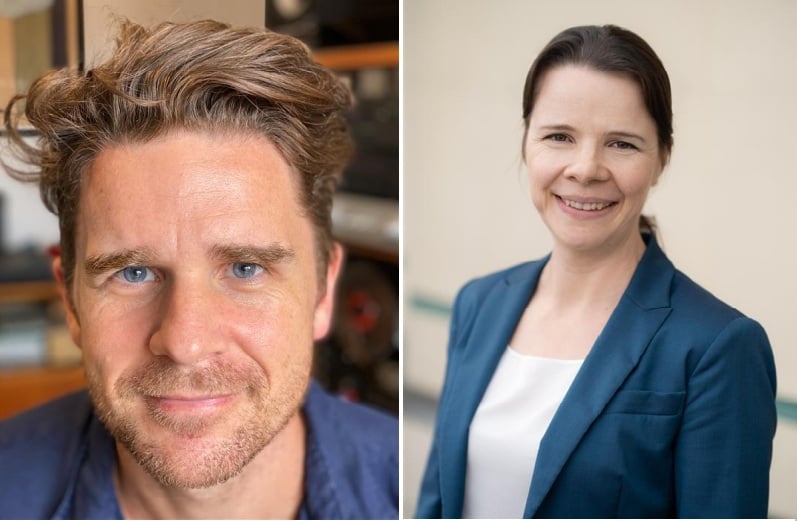
Dr. Ruari Elkington, chief investigator at QUT Digital Media Research Centre (left), and Olga Aleksan, senior regional sales manager, Cinema, Christie.
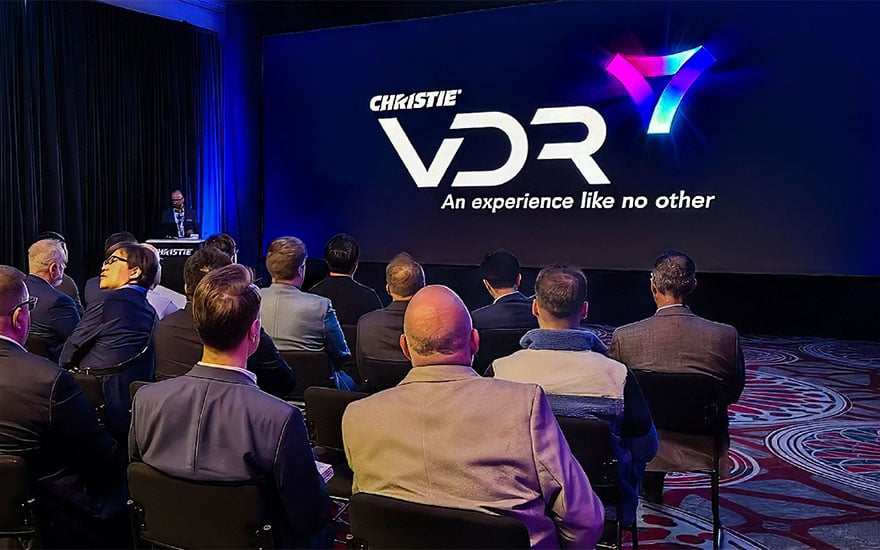
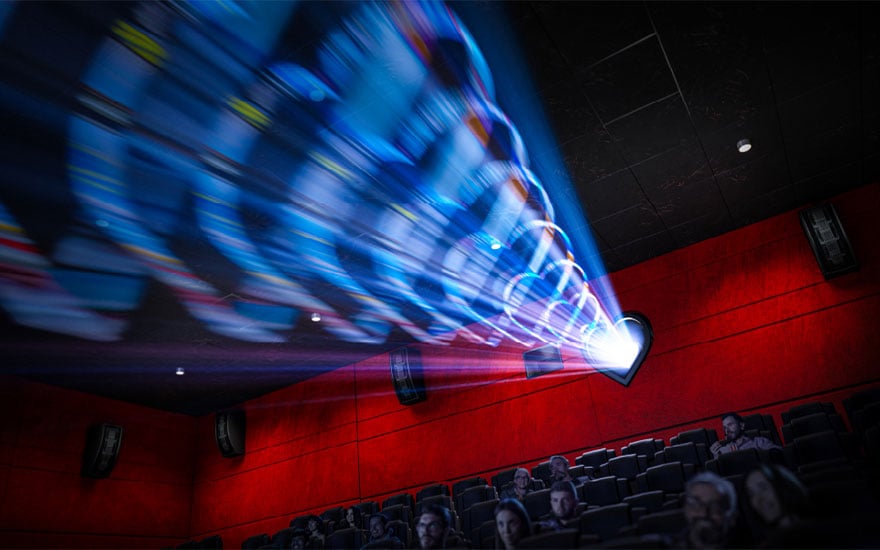
Recognizing rising audience expectations for image quality, Christie has directed R&D towards solutions that differentiate cinemas while respecting financial realities. Among the products released recently, a key discovery was that tighter software integration enables precise control of RGB laser diodes. From that base, Variable Dynamic Range (VDR), an advanced software application for RGB projectors, began as a bold idea and is now progressing towards deployment. VDR is designed to deepen blacks, lift sequential contrast, and enhance color – particularly at near black levels. Importantly, it was Christie’s cultural willingness to resource and support improvisation, the classic ‘yes, and’ attitude, that enabled this technical innovation to occur.
During the same period, cinemas were engaged in constant innovation, to respond to the reality of business challenges. As mandated closures and social isolation measures took hold, cinemas leaned into new initiatives, from rapidly scaling up bespoke streaming services, to social media tours of bio-boxes, to Uber Eats popcorn and choc tops, and new social media campaigns. These reminded audiences of the resilience of the industry and the vital role of cinemagoing to Australian society; a reminder of what cinemagoing meant as it was taken away so abruptly by COVID restrictions. Cinema workers and leaders immediately pivoted to innovation – just as the industry has done over a century of challenge and opportunity.
Finding meaning in cinema
This spirit of adaptation was not only about surviving – it was also about holding on to something deeper. In turbulent periods, resilient organizations and people continue to draw strength from the third pillar: meaning.
Meaning, underpinned by purpose and embedded core values, keeps individuals and organizations looking ahead with hope, even in crisis. Psychiatrist and concentration camp survivor Dr. Viktor Frankl described in his book ‘Man’s Search for Meaning’ how a future-focused purpose helped him endure inhumane conditions. He wrote: “We must never forget that we may also find meaning in life even when confronted with a hopeless situation, when facing a fate that cannot be changed.”
Recent events such as COVID-19 and industry strikes have reminded us how quickly the unimaginable can disrupt our lives and our sector. Yet even through these crises, it was meaning – underpinned by purpose and embedded core values – that kept individuals and organizations looking ahead with hope.
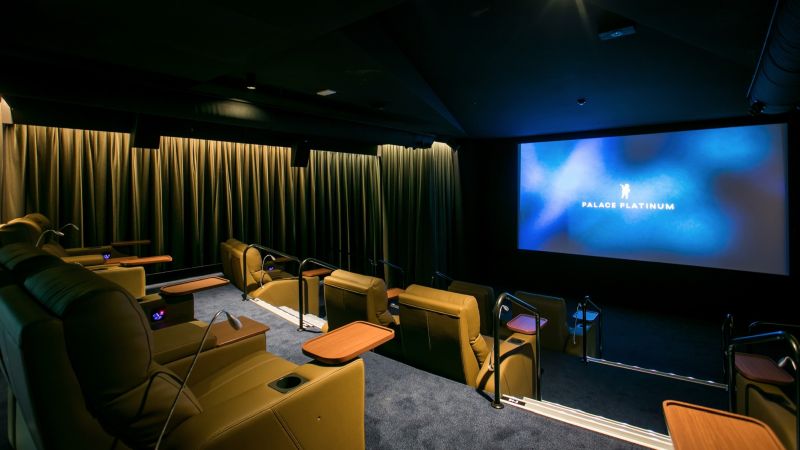
The work QUT’s Digital Media Research Centre has engaged in with industry partners, the Cinema Association Australasia, Independent Cinemas Australia, Motion Picture Distributors Association of Australia and others, underscores time and time again that the real ‘meaning’ Australian audiences derive from cinemagoing extends far beyond just ‘watching a movie’. Watching a movie can be easily done at home. Cinemagoing is an entirely specific context of meaning-making for audiences where social, emotional and experiential elements combine to elevate an experience.
The Australian cinema industry gets to witness the value they bring to local communities every time people enter and exit their theatres. These audiences offer a vital opportunity to reflect on the final pillar of resistance – finding meaning. Prompts such as, ‘Where are my values in this business?’ allow for an alignment with the ‘why’ of business. Finding meaning helps build resilience, and reflecting on our values helps us find meaning.
Christie’s commitment to core values
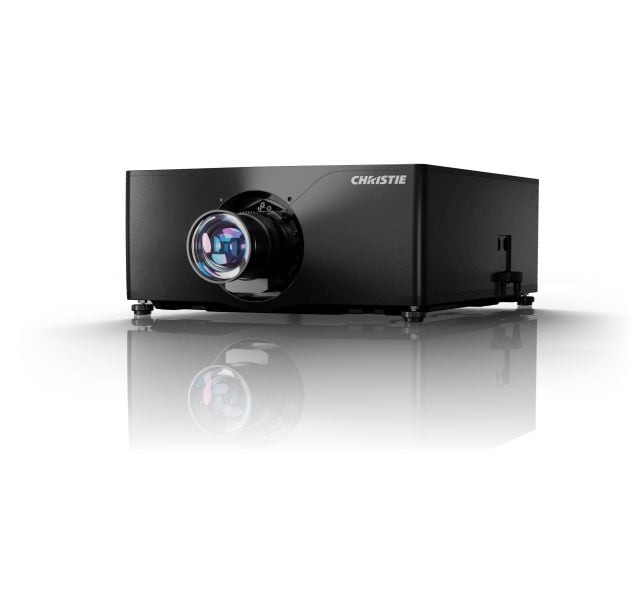
Christie’s path also reflects this principle. Through a difficult period, the company reaffirmed its purpose by leaning on its core values: a love of cinema, engineering excellence, and integrity. The outcome included deeper industry partnerships and renewed trust in Christie as a technology partner. On the product side, Christie released the RBe projector line and a fourth-generation IMB server. It is currently preparing to launch a new projector line and deploy VDR in 2026-27.
Resilience is not a single act; it is a way of life. By accepting reality, improvising, and holding on to meaning, individuals and organizations can navigate setbacks and emerge stronger. For cinema – and for Christie – these are lived practices that continue to guide the road ahead.
This article was originally published in IF Magazine’s 2025 AIMC edition, which you can read online here: https://issuu.com/theintermediagroup/docs/aimc_2025