
Charles Boileau discusses color accuracy, cinematic fidelity, and collaborative review
At Rodeo FX in Montreal, Charles Boileau still gets excited watching artists walk into the review room.
For Boileau, Rodeo FX’s Color and Imaging technology supervisor, the experience of seeing visual effects work displayed properly — with deep blacks, accurate color, and cinematic scale — never gets old. After years spent working in cinematography, color grading, and imaging workflows, he still sees the cinematic review experience as something special.
At Rodeo FX, artists spend countless hours reviewing visual effects sequences for theatrical films, streaming productions, and premium episodic series, where even the smallest tweaks to color, contrast, and shadow detail can change how a scene ultimately feels on the screen. The company’s roster of projects includes “Dune,” “Stranger Things,” “Game of Thrones,” and “The Lord of the Rings: The Rings of Power.”
“It’s always impressive to see how something can come into a post-production facility looking one way, and then come out looking another way,” said Boileau. “That whole process, to me, is a lot of fun.”
That fascination with image quality and color has shaped Boileau’s entire career.
Before joining Rodeo FX, Boileau spent more than a decade working in post-production and color grading after starting in cinematography and on-set production. Eventually, the long hours of production life pushed him toward post, where he specialized in color grading and imaging workflows. Later, he joined Technicolor in Montreal, where he led imaging workflows and color management initiatives across North America before moving to Rodeo FX.
Finding the right projector for post-production
Along the way, projection became central to how he evaluated and experienced film.
“When I was starting as a colorist around 2010, the holy grail was to be able to grade on a Christie projector,” Boileau recalled. “If you wanted to do serious film work, you really needed to have a projector.”
“I always trusted Christie for being accurate, easy to calibrate, easy to install — and the customer support was really good" - Charles Boileau, Rodeo FX
At a previous post-production facility in Montreal, Boileau remembers the arrival of the company’s first Christie Xenon-based 2K projector as a defining moment.
“That was one of the happiest professional moments of my life,” he said. “I knew that at that moment we were ‘in the game.’”
For Boileau, Christie cinema projectors earned a reputation for reliability and consistency at a time when studios were demanding more accurate and standardized imaging workflows across multiple viewing environments.
“I always trusted Christie for being accurate, easy to calibrate, easy to install — and the customer support was really good,” he said.
That trust would later influence Rodeo FX’s move toward Christie’s new RGBH projection platform.
As laser projection became more prominent in cinema applications, Boileau said the industry gained significant improvements in brightness and HDR capabilities, but not without challenges. Some RGB laser systems introduced issues related to color perception, including observer metameric failure — a phenomenon in which different viewers perceive projected colors differently due to variations in human vision.
Boileau explained that traditional Xenon projection produces a broader light spectrum that many viewers perceive as more natural, while narrow-spectrum RGB laser projection can introduce subtle color shifts for some viewers.
Those concerns made Boileau cautious about adopting early RGB laser solutions for post-production review environments, where color accuracy is critical.
Elevating post-production with Christie RGBH projectors
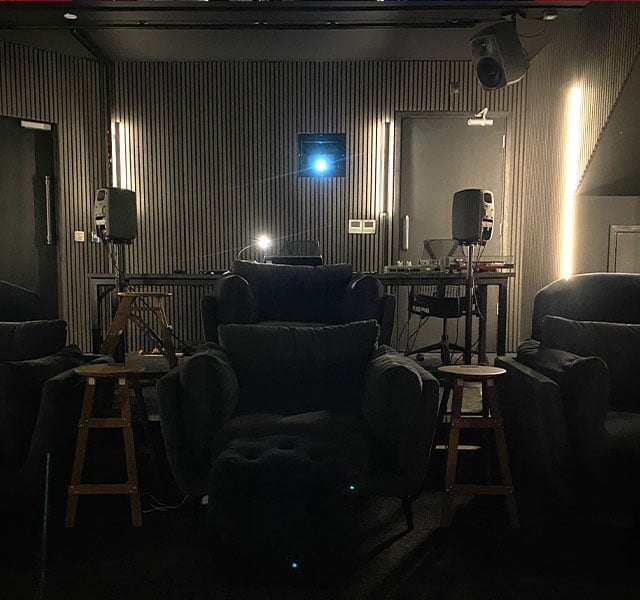
Looking to provide an uncompromised review environment for top-tier filmmakers, Boileau spearheaded the initiative to bring cutting-edge theatrical projection into Rodeo FX's screening rooms.
"I wanted our screening environment to perfectly mirror the premium setups that directors look for," he said. "I wanted to elevate the bar even further."
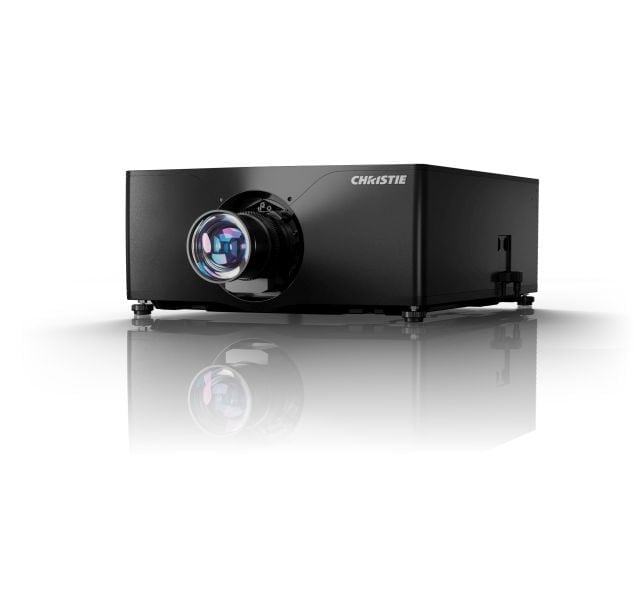
Boileau and the Rodeo FX team waited for a system that could better balance laser performance with the visual characteristics of Xenon projection. Conversations with Christie eventually introduced him to the company’s RGBH hybrid laser platform.
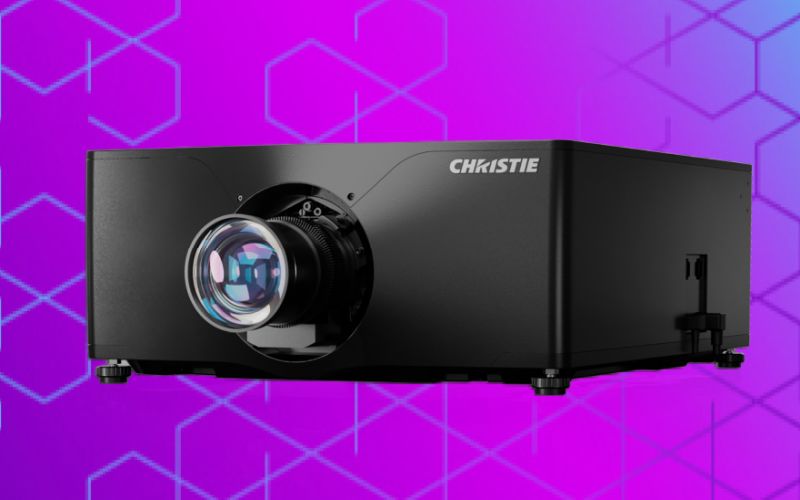
Rodeo FX is among the first facilities using Christie’s RGBH technology in a post-production environment.
“We waited patiently,” Boileau said. “And when it was finally close to coming out, we tested the projector and were super happy with what we were seeing.”
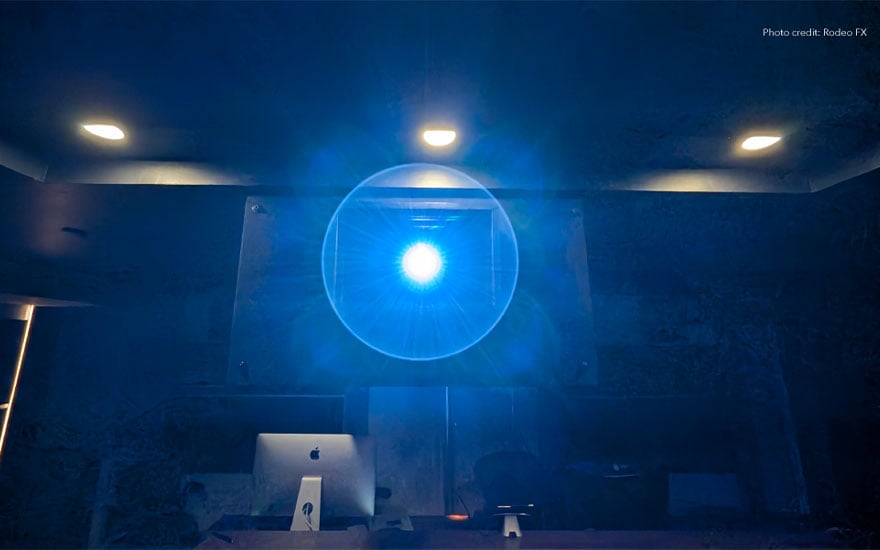
Today, Rodeo FX is among the first facilities using Christie’s RGBH technology in a post-production environment. Installation, Boileau noted, was remarkably straightforward.
“The form factor is small. It’s quiet, very cool, unobtrusive,” he said. “We didn’t need to modify anything substantially in the room.”
Boileau also participated in Christie’s CinemaCon technical deep dive earlier this year, where the company demonstrated how closely its RGBH system matched the look and feel of Xenon projection.
For many attendees, the difference was difficult to distinguish.
“Most people were not even seeing the difference,” Boileau said. “That was actually quite surprising.”
Beyond technical performance, Boileau believes projection plays an important role in restoring collaboration and shared creative experiences in post-production.
During the pandemic, he noted that many artists and production teams shifted to remote workflows, reducing the communal review experience that had long been part of filmmaking.
“I’m hopeful that this projector can kind of reconvene this experience for the different production teams,” he said.
That philosophy extends beyond live-action productions. Rodeo FX’s growing animation slate opens additional opportunities to refine color workflows and cinematic review processes across multiple production pipelines.
Immersing the audience in the theatre and beyond
For Boileau, the technology itself is only part of the story. What continues to drive him is the emotional power of cinema and the pursuit of image quality that feels authentic across every screen and medium.
Whether grading for movie theatre projection, HDR displays, or home viewing environments, Boileau remains fascinated by how images evolve through the production process.
“I really like it when things click together color-wise,” he said. “When you get something that’s coherent between different mediums.”
And despite spending his career analyzing projection quality, color science, and post-production workflows, Boileau says he still enjoys going to the movies like everyone else. In fact, this summer’s “The Odyssey,” “Masters of the Universe,” and “Toy Story 5” top his list of must-see movies this year.
So, does he wear his professional cap and mentally critique the production?
“No. When I do go, I tend to let myself go and just be entertained,” he said. “I sit down with popcorn and have fun watching a movie.”
For someone who has spent years chasing accurate color and cinematic fidelity, Charles Boileau says the goal ultimately remains simple: to make sure audiences are immersed in the story rather than distracted by the technology behind it.