
Why viewing distance, content type, and room size influence pixel pitch selection
Choosing the right pixel pitch is an important decision when designing an LED video wall. Pixel pitch determines how close viewers can stand without seeing individual pixels and directly impacts project cost and overall system design.
Designers and integrators often begin with broad questions about the “best pixel pitch” or how to match a specific pixel pitch to a room or application. The answer depends on several factors, including viewing distance, content type, and room size.
This article provides a practical framework to help project teams choose the right specification and understand how different pixel pitch values apply in real-world environments.
If you haven’t yet read the first article in this series, "Understanding pixel pitch in LED video walls," it provides a useful foundation for understanding how pixel pitch works. This article builds on that understanding and focuses on how to match pixel pitch to your specific installation.
Why pixel pitch selection matters
Pixel pitch affects three core elements of LED performance:
- Image clarity
- Viewer comfort and engagement
- The total resolution of the display
A smaller pixel pitch supports higher resolution within the same physical area. This allows the LED wall to display detailed content such as fine text and intricate graphics without pixelation. A larger pixel pitch can still deliver excellent performance, but only when the viewing distance is appropriate.
Choosing the right pixel pitch ensures that the display looks seamless from the intended viewing positions. It also ensures that the chosen specification aligns with budget, installation constraints, and long-term content requirements.
Viewing distance is the primary factor
LED installations often begin by understanding how far the closest viewers will be from the display. Viewing distance is the most important variable in pixel pitch selection and serves as the basis for most guidelines.
One commonly used guideline is one foot per millimeter. This means that for each millimeter of pixel pitch, a viewer should be approximately one foot away for optimal clarity. For example:
- A 1.2mm display is best viewed from roughly 12 feet or more
- A 2.5mm display is best viewed from roughly 25 feet or more
Here are our suggested optimal viewing distances for LED displays:
| LED display pixel pitch (mm) | Pixel pitch x viewing distance* | Optimal viewing distance |
| 0.8mm | 0.8mm x 3m | 2.4m (7.87’) |
| 1.0mm | 1.0mm x 3m | 3m (9.84’) |
| 1.25mm | 1.25mm x 3m | 3.75m (12.3’) |
| 1.5mm | 1.5mm x 3m | 4.5m (14.76’) |
| 1.9mm | 1.9mm x 3m | 5.7m (18.7’) |
| 2.5mm | 2.5mm x 3m | 7.5m (24.6’) |
This guideline works well for general planning, although real-world environments may require adjustments based on content, ambient lighting, and how viewers move through the space
A display with a pixel pitch that’s too large for the viewing distance will reveal visible pixels, which reduces perceived quality. A display with a smaller pixel pitch than necessary can look excellent, but may increase costs without a clear benefit.
Understanding the viewing pattern within the room is the first step in selecting the right technology.
Content type influences pixel pitch requirements
Different types of content place different demands on pixel pitch. For example:
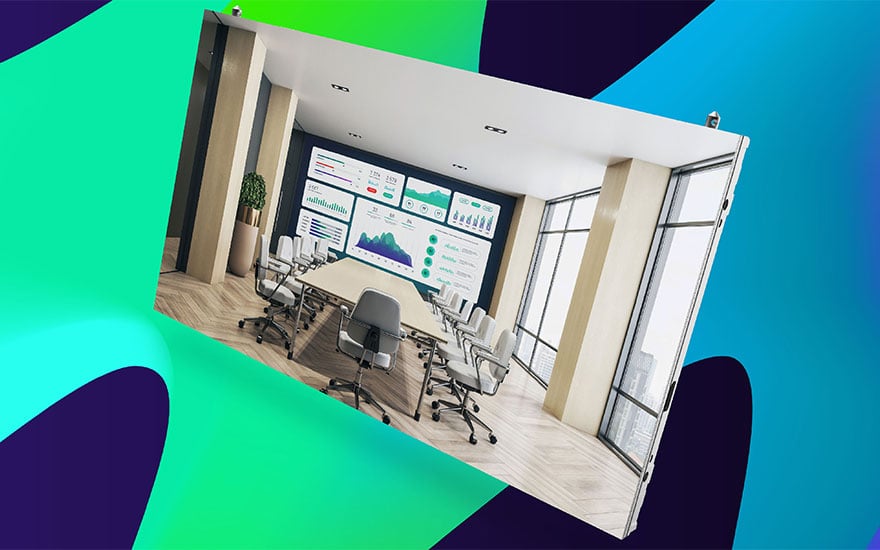
- Detailed text, dashboards, or data visualizations require fine pixel pitch
- Interactive content often demands closer viewing distances and tighter pitch
- Cinematic video, high-motion content, or branding and ambient visuals can often tolerate larger pixel pitch values, rather than high-density pixel structures.
Corporate lobbies, command and control centers, and broadcast studios often rely on fine-pitch LED to ensure small text and detailed interfaces remain legible at close range. Retail displays, auditoriums, and large-scale digital signage installations can achieve excellent impact with larger pixel pitch values because viewers engage from farther distances.
Understanding the dominant content type helps ensure that the LED wall performs well under daily conditions.
How room size can shape pixel pitch choices
The physical characteristics of a space also play a major role. A large room with open viewing areas can allow for a broader range of acceptable pixel pitches because viewers can be positioned farther away. Smaller rooms or narrow hallways require tighter pixel pitches because the audience may stand closer to the video wall.
When evaluating a space, consider the following:
- Minimum and maximum viewing distances
- How viewers move through the environment
- Whether the display is used for passive viewing or active viewing
A carefully selected pixel pitch ensures the display blends naturally with the space and supports the intended purpose.
Balancing cost and performance
Pixel pitch is one of the largest contributors to the overall project cost of an LED video wall. As the pixel pitch decreases, the total number of LEDs increases, which raises material and manufacturing requirements.
When choosing pixel pitch, the goal is not to select the smallest value available but to choose the value that delivers the right performance for the intended application. The right choice creates a seamless visual experience without unnecessary cost escalation.
Pixel pitch and Christie LED solutions
Christie offers a range of LED video wall solutions designed to fit the full spectrum of environments, viewing distances, and creative requirements.
Fine-pitch solutions such as MicroTiles LED support premium installations with exceptional color performance and uniformity. Larger-pitch options provide high brightness and durability for large-format or architecturally integrated displays.
Selecting the right pixel pitch is a matter of understanding your environment, your content, and the expectations of your viewers. When these elements are aligned, LED displays can transform a space with clarity, depth, and visual impact.