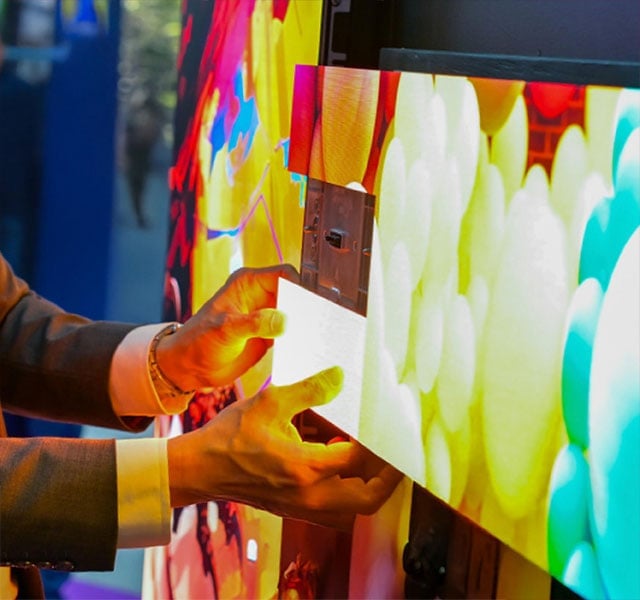
What separates a professional LED video wall from a commodity one?
On paper, selecting an LED video wall can seem like a straightforward specification exercise: Pick a pixel pitch, confirm the brightness, check the resolution. But there’s more to keep in mind than simply looking at those specifications. There are several factors to consider, including the long-term performance of your video wall.
As you take into account your installation space and viewing distance from your display, you then need to consider the color consistency across hundreds of tiles, how a video wall’s brightness holds up under continuous operation, whether modules can be replaced quickly without a crew dismantling the wall from behind, and energy efficiency. Depending on your installation, you may need the flexibility to create a display surface that does more than just fill a rectangular space on a flat wall.
Being able to spec a display based on those factors is what separates a professional LED video wall investment from a commodity or budget video wall purchase. These kinds of details are determined entirely by engineering decisions made at the manufacturing level, long before it’s available for customers. These engineering decisions are what make Christie's LED video wall portfolio built to deliver the quality and performance that a professional AV installation demands.
This article examines what enterprise and premium LED video wall installations actually require, why the features matter just as much as the panel specifications, and how to evaluate LED video wall technology as a long-term investment rather than a one-time hardware purchase.
Pixel pitch, brightness, and color accuracy: Where budget LED walls fall short
Pixel pitch
Pixel pitch, which is the distance in millimeters between the centers of adjacent pixels, is the specification most buyers focus on first, but it's often overspecified.
For example, a smaller pixel pitch offers higher pixel density, resulting in higher resolution, superior clarity, and sharper images. While these are important considerations for applications that require closer viewing distances, such as control rooms, not every application calls for this kind of detail. So, if the viewing distance from the display is 15′ away, a video wall with an ultrafine pixel pitch of 0.9mm means spending your budget on a resolution that the human eye can't resolve at that distance. In that case, it would make more sense to move to a 1.5mm pixel pitch video wall that still allows you to achieve maximum impact for the viewer.
Pixel pitch calculations can also vary among LED wall manufacturers, creating confusion and quality differences depending on the manufacturer. When you understand the relationship between pixel pitch, viewing distance, and resolution, you can avoid overinvestment in unnecessary pixel density.
Learn more about choosing the right pixel pitch for your LED video wall.
Brightness
Brightness matters, but it’s also frequently misunderstood. High brightness may seem like a benefit, but it may not be the right choice for every application or environment.
While some video walls can achieve higher brightness levels ranging from 2,000 nits to 12,000 nits, they are better suited to outdoor LED displays or to indoor environments with high ambient light, such as lobbies or atriums.
Whether your display is indoors or outdoors, you need to factor in whether you can adjust brightness levels to ensure clear visibility without glare, calibrate colors, and ensure precise alignment of panels for seamless visuals and uniform brightness across the entire display.
Color accuracy
Color accuracy and uniformity across the wall are where the real differentiation emerges.
Two LED video walls with identical pixel pitch and brightness ratings can look dramatically different in side-by-side operation due to differences in LED binning quality, calibration algorithms, and processing capabilities. While these specifications are harder to compare on paper, they’re the most visible in practice.
This is where it pays to know what questions to ask when choosing your video wall. When it comes to color reproduction, there are two key industry standards to be aware of: P3 and NTSC color gamuts. A display with P3 color delivers higher color accuracy and is better suited to applications that require a high level of detail, such as control rooms that require critical viewing conditions. NTSC is a standard in broadcast television that provides excellent color accuracy for displays such as corporate lobbies or digital wayfinding signs, where the viewing distance is further away.
Processing: The foundation for quality
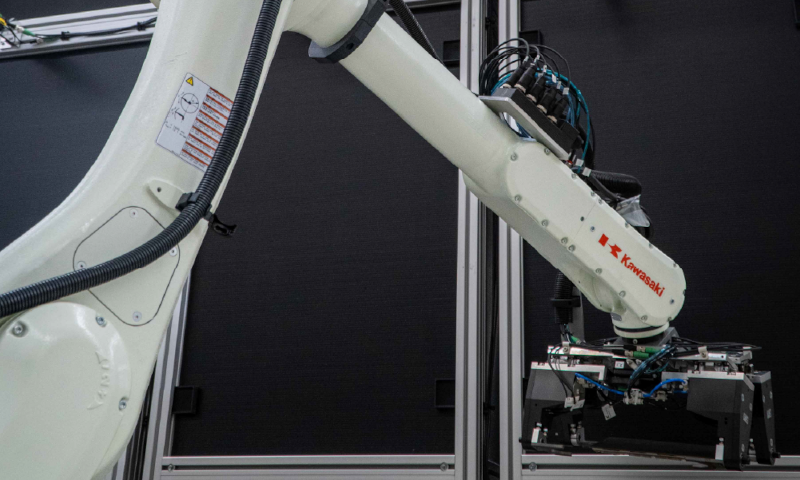
The processing system behind an LED video wall determines how input signals are received, scaled, windowed, and distributed to the display. It can also handle color space conversion, scaling algorithms, latency management, refresh rates, brightness levels, and the synchronization of content across thousands or millions of individual pixels.
The processing layer is also where calibration data lives. Over time, individual LED modules age at slightly different rates, causing subtle shifts in color and brightness. The processing system applies calibration corrections to maintain visual uniformity, and the quality of this calibration algorithm, including how precisely it corrects, how frequently it updates, and how gracefully it handles module replacements, can directly affect how the wall looks over years of operation.
For Christie® LED video wall systems like the Core Series III, our E600 video wall controllers are HDR10-compatible and provide advanced image processing to deliver content in 4K at 60 Hz.
But processing for LED video walls can be about so much more than just hardware. For Christie MicroTiles® LED and XP Series LED, the Christie VividLife™ processing platform is an end-to-end video wall solution designed to deliver lifelike, uniform, flicker-free visuals and maintain precise grayscale at any brightness level. This LED processing platform combines hardware such as our E1000 video wall controller with intelligent processing, pixel-perfect calibration, and our intuitive VividLife UI into a seamless system that delivers exceptional image quality.
Mounting and serviceability
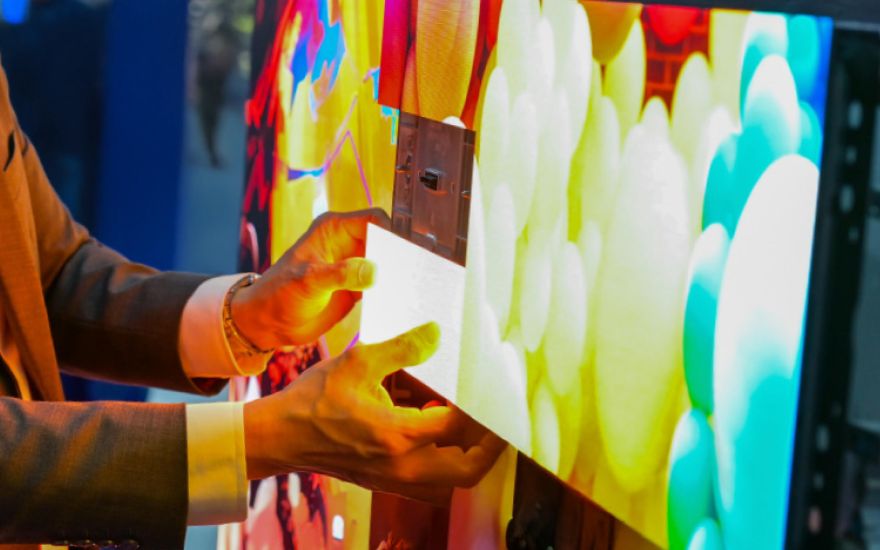
The difference between a budget LED display and premium LED video walls can also be found in the options for installation, maintenance, and serviceability. Once an LED video wall is installed, it will eventually need to be maintained and serviced, and even have individual modules replaced, which is why the mounting system is important to consider, as it determines how practical that maintenance is.
Front-serviceable designs allow technicians to access and replace modules from the viewing side of the wall, without requiring access to the space behind it. In the majority of real-world applications, such as corporate lobbies and control rooms, or installations with unique architectural features, this is critical because rear access is limited or impossible.
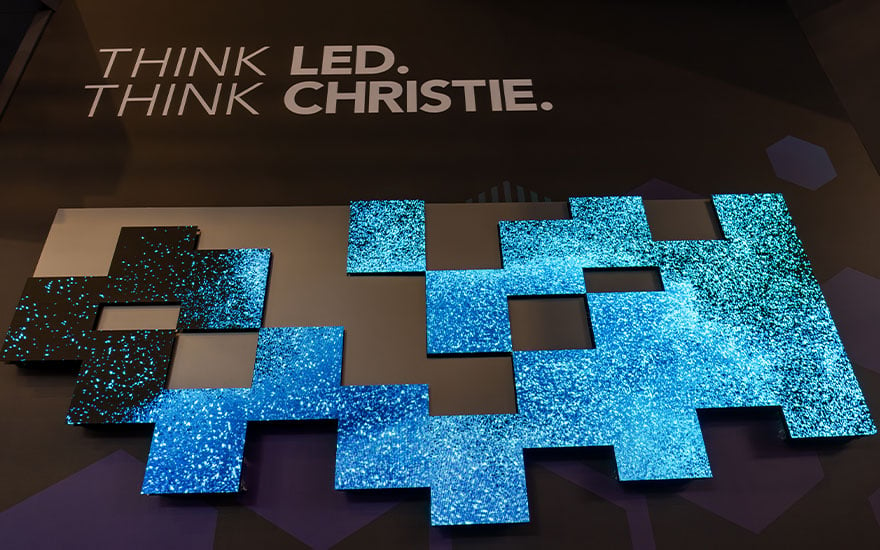
Both Christie XP Series LED and Core Series III offer front serviceability and ADA-compliant direct mounting. The cabinet-free MicroTiles LED takes that front serviceability a step further. The proprietary Christie QuickMount™ installation system and Click-n-Go™ tiles allow you to position them anywhere, even in complex custom installations with convex or concave curves. The tiles are hot-swappable, giving technicians full access when service is required. If a tile needs to be replaced or moved, the patented Neighbor Detection™ technology and AutoMatch feature automatically detect the new tile and calibrate it to match its neighbors, ensuring uniformity in color and brightness without manual intervention.
Choosing a display with these kinds of serviceability features can define the operational experience over the life of the wall. A video wall that’s difficult to service would lead to time-consuming, more costly maintenance and increased downtime.
Christie's LED video wall portfolio
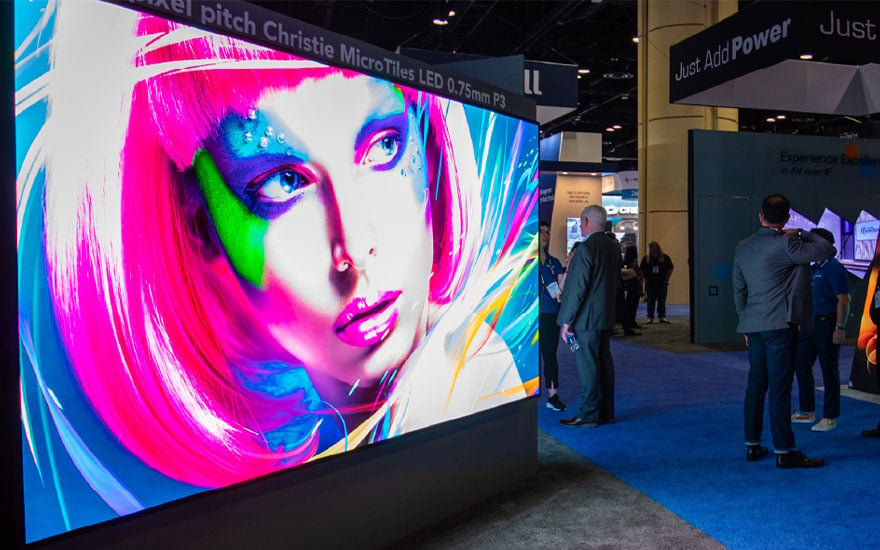
Christie offers different LED video walls to serve different application requirements and budgets.
Core Series III offers you excellent value in your investment with outstanding performance and reliability. Available in a range of pixel pitches, from 0.9mm to 2.5mm, it delivers 24/7 performance with lower power consumption for applications where a strong price-to-performance ratio is important, such as corporate lobbies, meeting rooms, digital signage, auditoriums, and control rooms. Core Series III has a lighter-weight design, making it easier to handle and install with our ADA-compliant direct-mount system, and it offers front serviceability for easier maintenance.
XP Series LED video walls are engineered to deliver exceptional precision and performance. Purpose-built for demanding visual environments such as immersive dark rides and mission-critical control rooms, XP Series features precise color accuracy and outstanding grayscale fidelity for unmatched visuals at any brightness level, so your content appears exactly as intended, whether it’s installed in low-light or high-brightness settings.
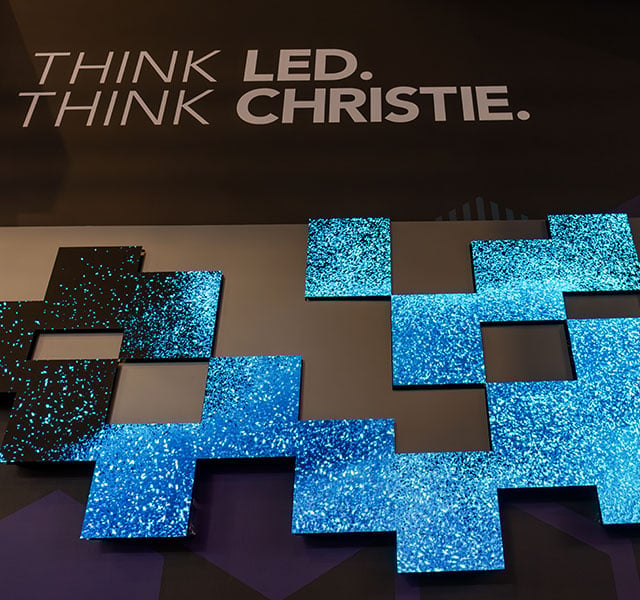
MicroTiles LED is our premium solution that gives you architectural design freedom to create custom LED video walls in a variety of shapes and configurations. Designed and built in North America, MicroTiles LED are TAA-compliant and offer pixel pitches from 0.75mm to 1.5mm, superior visuals with 4K at 120 Hz with HDR10, 24-bit processing, and P3 color. MicroTiles LED goes beyond conventional display technology to deliver a premium solution for flagship corporate spaces, cultural institutions, government facilities,theme parks, museums and exhibits, utilities, simulation, or any environment where the display isn’t just a screen, but an architectural element that demands sculptural precision, unmatched visual performance, and designs that simply can't be achieved with traditional LED systems.
The right LED video wall for every environment
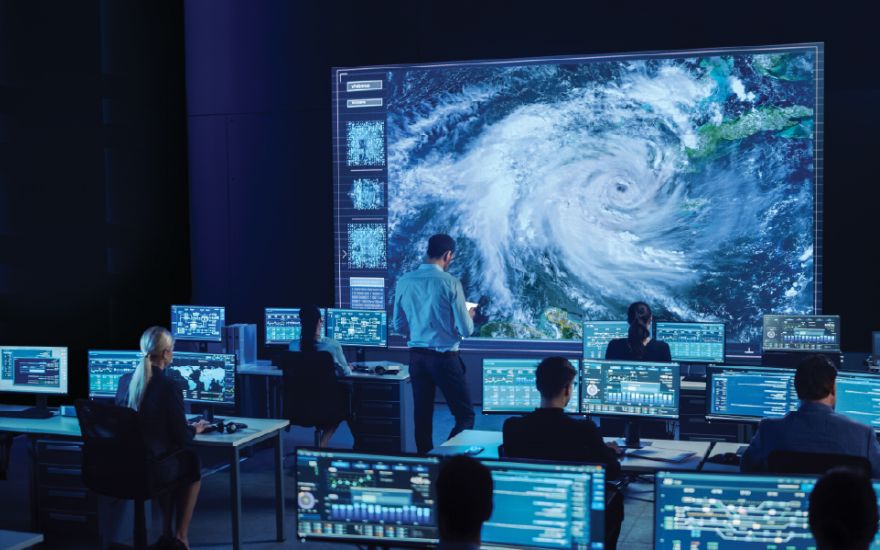
The Christie LED video wall portfolio is built to serve the full range of professional display environments, from corporate lobbies and government operations centers to cultural institutions and immersive attractions.
Across every product in our portfolio, the underlying engineering priorities are the same: Outstanding performance over the life of the installation, serviceability that keeps maintenance practical rather than disruptive, and image quality that holds up under the demands of continuous 24/7 operation. When evaluating options for your LED video wall investment, the question shouldn’t be which panel is the cheapest, or even which looks the brightest in a demo room. Instead, you need to identify the display that not only fits your budget, but is engineered to perform in your specific environment and maintain quality over the years following installation.
Explore more Christie technology
Learn more about how we power professional visual displays across a range of applications:
- Cinema projection systems: Delivering consistent image quality in modern theatres
- Professional projection systems for large-format and high-brightness environments
- LED video wall display systems for enterprise and large-scale environments
- Immersive projection and visualization systems for large-scale environments
- Control room display solutions for mission-critical visualization
- Large-venue projection and display systems for high-impact events