
We look at the innovation and technology that have shaped the past 25 years of Cinema
As Cinema is currently experiencing an extended superhero stage, we thought we'd begin our story by holding up a mirror to a cinema projection superhero of our own — the powerful but often misunderstood Digital Light Processor.
And, because the digital cinema business of today wouldn't exist without the DLP projector, this is also a story of 25 years of remarkable technology and innovation that have changed the industry and show little sign of slowing, even today.
The film business may have faced revolutions and challenges before, but nothing — talkies and color and TV included — has shifted the fundamentals the way digital has. Not a single technology, craft, skill, or way of doing business has remained unchanged.
Reverse engineering
So, let's start in the late 1980s where physicist Larry Hornbeck at Texas Instruments was trying to efficiently digitize incoming light. To do this, he's using devices called microelectromechanical systems modulators that use a matrix of micromirrors, each narrower than a single human hair. Larry realizes that if he reverses the process and arranges hundreds of thousands of his micromirrors as individually addressable pixels, he can bounce light off them at will, and project very high-resolution digital images using any light source he cares to point at them. He invented the DLP — and cinema's future.
Now, if you've only ever known DLP digital projection, it's almost impossible to imagine quite what a revolution this was. Or how poor every previous attempt at digital projection had been. There were devices based around cathode ray tubes that produced unreliable images and muddy colors at laughably low resolutions, even a popular device that weighed as much as an automatic washing machine, used a spinning glass disc coated with oil to produce an image, and delivered, at best, 1500 lumens. It worked just about as well as it sounds.
A new beginning and a missing commercial link
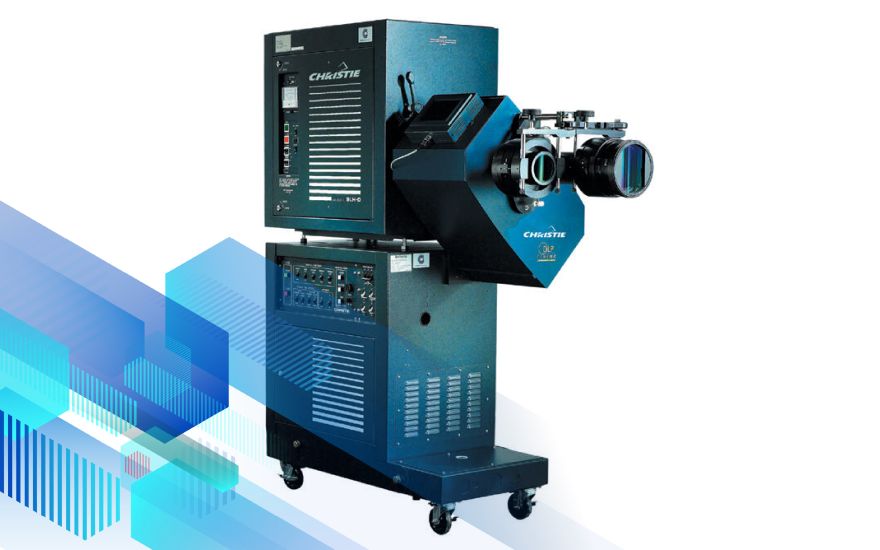
By 2000 though, everything was different. Christie — by then the first cinema projector manufacturer to license DLP — had used a Christie DCP-H projector to make “Toy Story 2” the first picture to premiere digitally, and the movie world was waking up to the fact that digital might work way better than film.
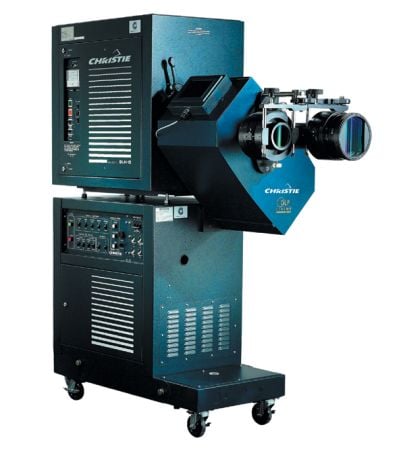
The Christie DCP-H cinema system was the first digital cinema projector.
But something was missing — a viable commercial model. The Virtual Print Fee championed by Jack Kline, former Christie chairman, president and CEO, really was that missing link. It brought 20th Century Fox, Walt Disney Studios, Universal, Paramount, and many more on board, put thousands of digital cinema projectors into hundreds of movie theatres and transformed how movies get made, consumed, and funded. By 2008, in under a decade, Christie had completed over 5,000 digital cinema installations and laid firm foundations for today's digital ways of working.
DLP meets RGB
In 2001, to meet the 3D boom, we introduced the world’s first line of stereoscopic 3DLP projectors, beginning a trend for 3D rides in theme parks that continues to this day.
In the years that followed, our new Network Operation Centers introduced sophisticated remote management software like today’s Cinergy, and, behind the scenes, continued work on a technology every bit as important as Larry Hornbeck's DLP — RGB pure laser illumination.
Now, you can have digital without RGB pure laser, but together? That's when the special stuff happens. They bring a level of control and power that lamp and film-based systems could never dream of, and if you're Christie’s Mike Perkins, and developing the E3LH projection system in partnership with Dolby Laboratories, they bring you an Academy of Motion Picture Arts and Sciences Award in Scientific and Engineering, which is even more exciting.
That Academy Award® is an indication of how embedded RGB pure laser and digital are now in the movie business. Digital Cinema is digital projection, and digital projection continues to advance.
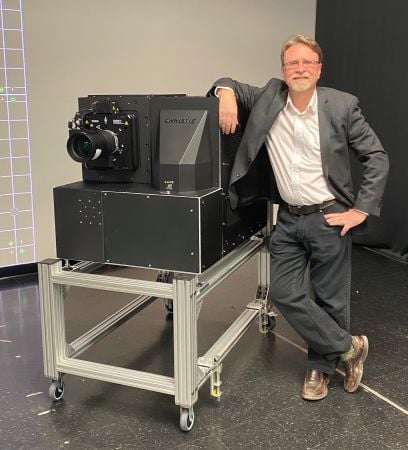
Christie’s Mike Perkins poses with the Christie E3LH Dolby Vision Cinema Projection System.
There's VDR, a forthcoming Christie technology that helps exhibitors achieve substantial energy savings, longer laser life, and a higher contrast ratio. Designed as a simple software update for CineLife+ Series projectors with Real|Laser illumination, it analyzes every incoming video frame and modifies output laser power to suit. Content is optimized — in real-time — for contrast, black-level detail, power savings, and original creative intent.
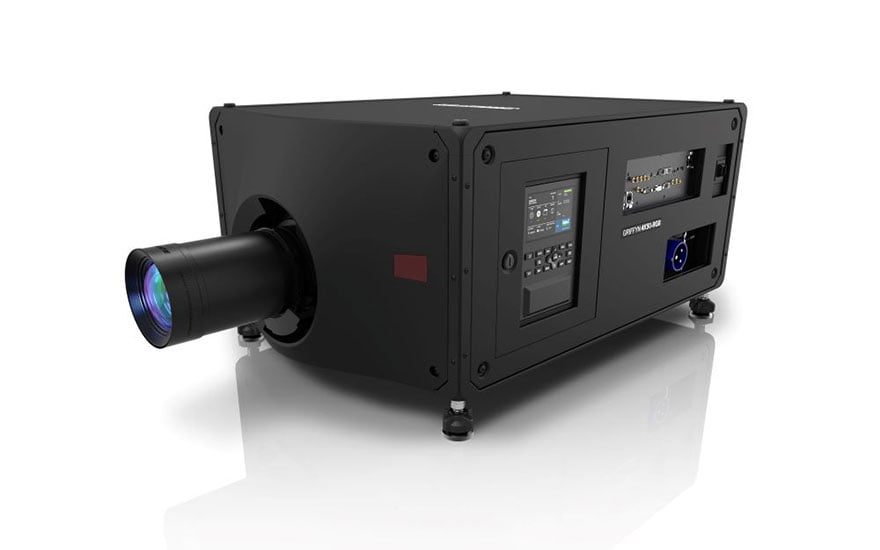
And the range of digital projectors continues to expand, too. Two new RGBH cinema projectors, the CP4415m-RGBH and CP4420m-RGBH, were recently launched. Featuring Christie CineLife+™ electronics with a 0.98” 4K SST DMD and Phazer™ illumination technology, RGBH cinema projectors offer exhibitors even more choice to put the right light on screens up to 63′ (19m) wide.
A future yet to come
If the last 25 years of Cinema's 130-year history have been a rollercoaster, the next promise to be a full-on immersive ride. Everyone agrees that AI will change everything, yet nobody agrees how, with few believing it will be like it is in the movies. In this new future, Cinema will face the same challenge it always has, artistically exploring and explaining the world both as it is, and as it hopes to be.
There will be missteps, there always are, but there will be marvelous things too — enough to fill every cinema, and every audience, with promise and wonder.