
We look at the pivotal moments in the history of digital cinema, and what's ahead for the industry
In a previous Spotlight article, we looked at the DLP projector and how it has changed the cinema industry. Now, we’re taking a deeper dive into the past 25 years of cinema technology in this Q&A with our Cinema team.
They share their insight about how digital cinema was not only a transformative technology for the industry as a whole but also paved the way for the newest generation of cinema projectors.
What was the most transformative moment in the transition from film to digital projection, and why?
The tipping point was the industry-wide standardization around DCI specifications in the mid-2000s followed by the Virtual Print Fee (VPF) financing model. DCI created a uniform technical and security framework that studios trusted, while VPF solved the economic barrier for exhibitors. Together, they aligned Hollywood, manufacturers, and exhibitors around a single ecosystem.
Looking back, what did the industry misunderstand about digital cinema in its early years?
Many assumed that digital was a film replacement technology, but really, it was a platform shift. Early conversations focused on the resolution versus 35mm, overlooking other advantages like consistency over time, operational flexibility, alternative content, remote management, and new premium formats. The industry underestimated how profoundly workflows, distribution, and audience expectations would change.
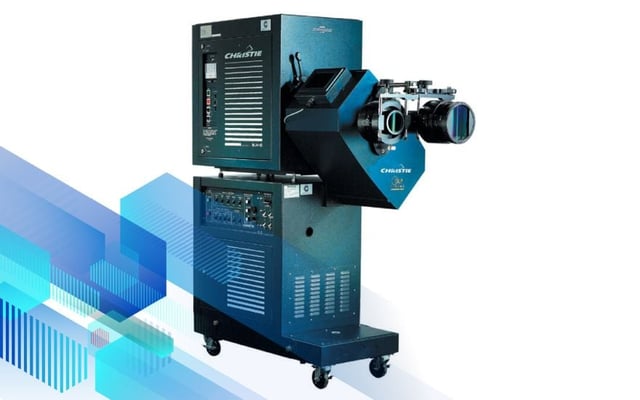
The total cost of ownership (TOC) in early DLP projection was significantly higher than many expected. Exhibitors still had to maintain expensive, high‑wattage Xenon lamps, but now with the added burden of a complex opto‑electronic system that carried costly repairs, specialized parts, and service procedures that required skills far beyond traditional 35mm maintenance.
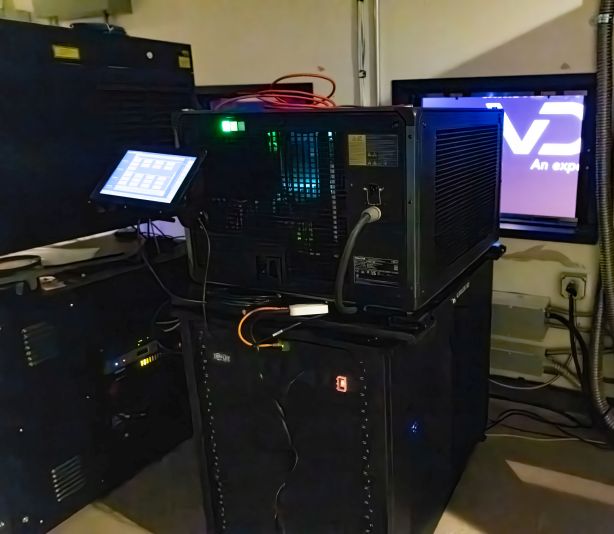
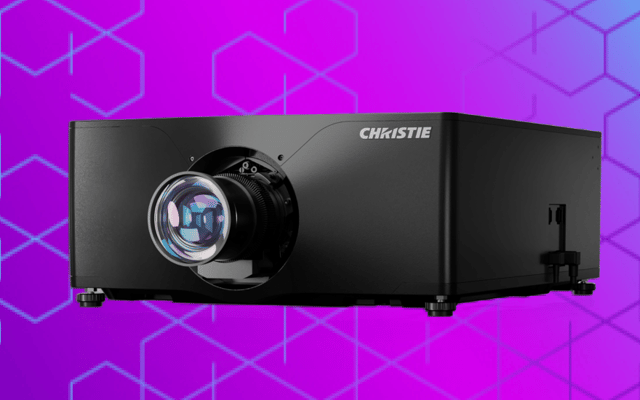
A Christie CP4435-RGB pure laser cinema projector, shown here, uses Multi Laser Pack Devices (MPDs) to achieve breakthroughs in brightness, color reproduction, image uniformity, contrast, and operational lifetime.
Although digital cinema was marketed as a long‑term TCO advantage, the absence of VPF support in the early years left many exhibitors feeling the economics didn’t match the promise. However, this was relatively short-lived as economies of scale made digital projection less costly to manufacture, improved efficiencies, and now, with the transition to mature laser illumination, TCO is clearly a winner for digital cinema in the laser era.
Beyond image quality, how did digital projection fundamentally change the economics and operational model of cinema exhibition?
Digital projection eliminated the cost and logistics of physical film prints, enabling wide releases, flexible scheduling, and rapid content changes. Operationally, it introduced automation, centralized control, and simplified scheduled maintenance. It also created new revenue streams with live events, eSports, corporate use, and dynamic preshow advertising. Projection moved from a manual craft to a networked system integrated into the exhibitor’s business.
Has projection technology become a competitive differentiator for exhibitors, or is it still largely perceived as infrastructure?
It’s both, but increasingly a differentiator for premium experiences. Standard auditoriums treat projection as infrastructure, while Premium Large Format (PLF), high dynamic range (HDR), high frame rate (HFR), immersive audio, and high contrast have become brand-differentiating experiences. As audiences become more selective about leaving home, the quality gap between good and excellent presentations matters more than ever before.
Beyond specifications, what fundamental change did laser projection introduce to cinema exhibition?
Laser projection fundamentally changed reliability lifetime economics. It removed lamp replacement cycles, reduced maintenance downtime, stabilized image performance over years, and enabled new screen sizes and formats. It also allowed exhibitors more design freedom due to lower heat output and power requirements. Basically, laser projection made premium presentation sustainable both operationally and technically.
How has the dialogue with studios and filmmakers evolved over the past two decades in terms of preserving creative intent on screen?
Early digital cinema was all about meeting baseline standards. Today, the dialogue is around dynamic range, contrast, color volume, brightness for 2D and 3D, high frame rate, and mastering pipelines. Filmmakers want assurance that what they grade is what audiences see, so we work closely with studios, post-production, and creatives to align projection capabilities with evolving demands.
“Exhibitors should prepare for a future where presentation quality becomes a strategic asset, not just a technical requirement.”
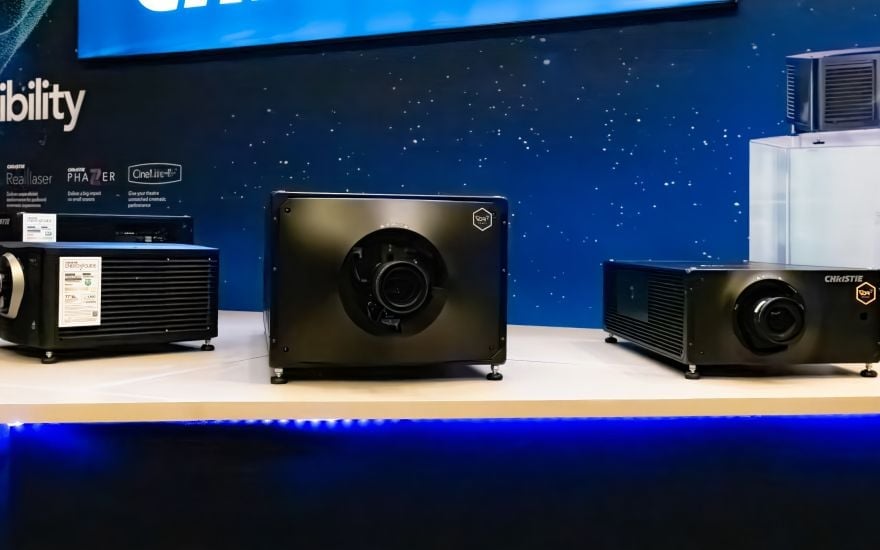
We are proud to have supported post-production since the inception of digital cinema. Post-production is the most important process in making sure films are seen all around the globe in a consistent manner, with creative intent intact. The dawn of laser projection has brought some challenges to this, especially around color perception between different viewers – a term we call metameric failure. New and innovative laser illumination implementations, like our CineLife+ RGBH model projectors, provide the best of both worlds when it comes to reaping the benefits of laser technology while ensuring artistic intent and consistency across thousands of screens is maintained.
At the end of the day, we strive to ensure that the creatives in this industry have the most tools at their disposal to remove barriers in their artistic vision.
Are we entering a new phase of innovation in cinema projection, or has the industry reached technological maturity?
We are entering an innovation cycle that focuses on experiential differentiation. This includes higher dynamic range and contrast, more color volume enabled by laser, more efficient and compact projectors, data-driven operations and remote management, and sustainability improvements.
Exhibitors should prepare for a future where presentation quality becomes a strategic asset, not just a technical requirement. This includes revenue differentiation, brand positioning with new marketing opportunities, programming flexibility, operational intelligence, and long-term sustainability as a key factor in operating costs.